Tuesday, 8 February 2011

Carling Nations Cup Kicks Off


The presence of Seamus Coleman, Ciaran Clark and Jonathan Walters in Ireland's team to play Wales at the Aviva Stadium tonight (7.45 pm) underlines the value of matches outside the major championship qualifying ties.


All three young players will eagerly accept this invitation from manager Giovanni Trapattoni to make a case, in this inaugural Carling Nations Cup tie, for a regular place in Ireland's international squad.

Ireland's failure to qualify for the World Cup finals in South Africa was particularly heart-breaking because it was such a marginal failure. Now the search continues for players who might add that little extra to earn qualification for the UEFA finals of 2012 in Poland/Ukraine.

The next UEFA qualifying match is set for March 26 against Macedonia in the Aviva Stadium. Trapattoni will not have the opportunity of spending too much time with his players in the meantime. Tonight's match, and the days preparing for it, were particularly important for that reason.

The new players have had the opportunity of impressing the manager in training and now they can take that a step further by playing well against Wales.

All three newcomers will welcome the fact that they will be surrounded by experienced international players. The presence of so many of Ireland's first choice team will offer them confidence and improve their chances of producing their best form.

Ciaran Clark, playing in his first match at left-back, will be comforted by the presence of his team-match at Aston Villa, Richard Dunne, alongside him and by the presence of Damien Duff just ahead.

Seamus Coleman will, no doubt, have been well tutored by Trapattoni in what is expected of him in a defensive role on the right of midfield. The backing of John O'Shea at right-back will surely offer him the encouragement to exercise his attacking inclinations.

What better foil could any striker have than the remarkable Kevin Doyle ? Jonathan Walters, who played 45 minutes as substitute for Doyle in the friendly against Norway in November, will benefit by having the ultimate team player from Wolverhampton Wanderers as partner on this occasion.

Ireland, just like Wales, were denied the services of several first-choice players by injuries but this Irish selection is a strong one. They will need to be hard-working and focused against a Welsh team who will, themselves, go into the match with many incentives.

This will be Wales' first match under new manager, Gary Speed, and the players are bound to be keen to impress. And with a forthcoming match against England in the UEFA Championship on the horizon, Wales' players will desperately want to claim a first-team place.

What is equally certain is that this will be a very close and competitive match; contests with Wales always are.

The players on both sides are well-known to one another. Richard Dunne for Ireland will have his centre-back partner at Aston Villa, James Collins, on the opposite side; Kevin Doyle will be striving to put one over on his club colleague, Wayne Hennessy, in goal for Wales; Glenn Whelan and Jonathan Walters will undoubtedly come into close contact with their club colleague at Stoke City, Danny Collins.

Ireland last played Wales in the qualifying tournament of the UEFA Championship of 2008. They won 1-0 at Croke Park on March 24, 2007 and drew 2-2 in Cardiff on November 17, 2007.

Ireland conceded a late goal to lose 1-2 to Norway in November at the Aviva Stadium in their last match and they will be looking for a positive result here to set them up for the challenging game against Macedonia to come.

Bright performances from the newcomers, Ciaran Clark, Seamus Coleman and Jonathan Walters would offer further encouragement for the difficult UEFA qualifying campaign that stretches ahead.

The teams that start at the Aviva Stadium tonight will be:

Republic of Ireland: Shay Given (Manchester City); John O'Shea (Manchester United), Sean St. Ledger (Preston NE), Richard Dunne (Aston Villa), Ciaran Clark (Aston Villa); Seamus Coleman (Everton), Glenn Whelan (Stoke City), Paul Green (Derby County) or Darron Gibson (Manchester United), Damien Duff (Fulham); Jonathan Walters (Stoke City), Kevin Doyle (Wolves).

Wales: 1. Wayne Hennessey (Wolves); 2. Neal Eardley (Blackpool), 3. Sam Ricketts (Bolton Wanderers), 4. Danny Collins (Stoke City), 5. James Collins (Aston Villa), 6. Andrew Crofts (Norwich City), 7. David Vaughan (Blackpool), 8. Andy King (Leicester City), 9. Simon Church (Reading), 10. Robert Earnshaw (Nottingham Forest), 11. Hal Robson-Kanu (Reading).


Monday, 7 February 2011

Real Maintain Bernabeu Record

Ronaldo

Not since the 1985/86 season have Real Madrid remained perfect at home through 22 weeks of La Liga action

No team this season has been able to leave the Santiago Bernabeu with points in hand. Real Madrid have won all 18 matches played at home and have scored 61 goals in doing so. The Whites haven’t lost a game on their home turf in ten months; a feat last accomplished by Luis Molowny’s men in 1985/86. That same year Real Madrid ended up winning all their matches at the Bernabeu and conquered La Liga and the UEFA Cup.

Madridistas have been privy to excellence at the Santiago Bernabeu this season. Whether it has been in La Liga (11), the Champions League (3) or the Copa del Rey (4), Real Madrid have had little trouble taking care of business on their home turf.

Not since the 1985/86 season have Real Madrid remained perfect at home through 22 weeks of La Liga action. With twelve league wins and three UEFA Cup victories under their belts, Luis Molowny and company went on to win both competitions and didn’t lose until a League Cup match on 18 May 1986.

The current streak, which now is in its tenth month, began last season. Not since Week 31 of the 2009/10 season has a team left Santiago Bernabeu Stadium rewarded for its football.


UCD RFC Centenary Dinner


This year’s annual dinner is one of the highlights of our Centenary celebrations. It promises to be a special event. It will be sponsored once again by Maples.

It will also involve the announcement of the “UCD Team of the Century” which should stimulate conversation given the quality of the players who played for UCD over the decades. 

The Details of the Feature Years for 2011 are: 

Year             President                               Captain
2001-01    Malachy Coughlan              Shane Moore
1990-91    Frankie Byrne                      Darragh O’Flaherty
1980-81    Finbar Costello                    Barry O’Brien
1970-71    P.L. Flanagan                      Shay Deering
1960-61    G.P.S. Hogan                       Henry Wall

Venue: O’Reilly Hall, UCD Campus, Belfield – Black Tie

Tables of ten are priced at Corporate table €1,250, Standard Table €1,000. 

If you wish to take a table please make your cheque payable to UCD RFC and send it to Paul Keenan or Mary McCabe, Capnua Limited, 51 Lower Leeson Street, Dublin 2. 

If you have any queries, please contact Mary on 01 6050002 or by email mmccabe@capnua.com.


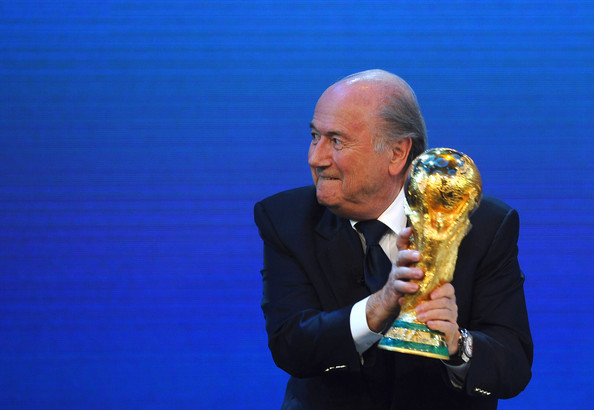
Blatter hints at summer World Cup


Fifa president Sepp Blatter has given the strongest indication yet that the 2022 Qatar World Cup will be held in the summer, not the winter. Blatter previously stated he expected the finals to be staged in January because of the country's climate.

The tournament traditionally takes place in June and July but temperatures in Qatar in those months can top 40C.

Blatter told the BBC: "I think for the time being the matter is on ice. Everything is settled for summer."

In January, Blatter said that the successful Qatari bid was based on a summer World Cup but the Fifa executive committee was entitled to change any element of it, adding that players had to be protected from extreme weather conditions.

But Blatter told BBC Sport's Brian Alexander: "Who said first that we should play in winter? It was Franz Beckenbauer, second Michel Platini and the world footballers' union (Fifpro).

"I am not in favour of one or the other. What I did say, winter is not only January or February. I think for the time being the matter is on ice."

He explained that a delegation from Qatar had visited Fifa headquarters in Zurich, Switzerland, and indicated that the World Cup would be played in the summer months.

"Everything is settled now for summer and all the 64 matches will be played in the territory of Qatar," said Blatter.

He added: "In the bidding documents it was clearly established that the executive committee reserved the right to change anything in the bidding process, but here in this case it must come from Qatar."

Qatar beat Australia, Japan, South Korea and the United States to host the tournament in the vote held by Fifa's executive committee on 2 December 2010 in Zurich.


Sunday, 6 February 2011

Is This Deja-vu for Airtricity League?


Just over a year ago in a conversation with the General Secretary of the Professional Footballers Association of Ireland [PFAI], Stephen McGuinness, at a social gathering I posed a question to him. It concerned a player being offered two hypothetical opportunities of which the first was a guaranteed contract of three hundred euro per week for ten years or an alternative one offering a grand a week, but for only two years? 

Far from being a trick question it was based on the PFAI’s commitment to working on the long term player welfare and the reliability of a secure income of €144,000 - €1,200 per month for a decade - as against a contract that would offer 30% more - but might not last more than a season or two. The response surprised me as it was deemed in the best interest of the player to forgo security and take the increased offer. 

Perhaps in the era of the boom players were right to maximise their earnings, given their limited sporting lifespan. However the risk of such an approach were obvious in a league that has for years been troubled by a lack of money as in my view the advice would have been the secure offer. The reality is that security of tenure, albeit on a reduced income, always proves to be the better option. 

As the landscape unwinds in the domestic game over recent weeks the news that Sporting Fingal – one of the most progressive franchises in the history of the league – was unable to meet players wages it was a warning that even such a progressive club is not immune to the financial problems affecting Ireland generally. Given that few football clubs break even, or make a profit, the notion that the vicious circle of debt - that has always plagued Irish football - was to be broken in the good times has proven misplaced. 

Only last week Chelsea FC plc announced their results for the financial year ending June 30, 2010 and shows the group had become cash positive for the first time since its acquisition by Roman Abramovich with a positive cash inflow of £3.8m in the year - compared to a net outflow of £16.9m in the previous year. On that basis Chelsea believed it was well positioned to meet UEFA's financial fair play rules. However they also noted that the group had a reduced operating loss of £68.6m on an improved group turnover of £205.8m. The operating loss was £3.6m better than the previous year. 

But the total loss for the financial year was £70.9m with the Amortisation of player transfer fees constituting the largest component of the difference between the positive cash flow and the operating loss. Clearly if full time professional football is not a profitable business at Chelsea, on a simpler scale in Ireland, the rationale still bears the same conclusion in the Airtricity League. 

The far reaching thinking that established UCD AFC as a League of Ireland Cub in 1979 was devised by the late Dr. Tony O’Neill who learned from his visits to US Universities of the value of offering talented athletes scholarships that enabled them to develop skills at the highest level whilst acquiring academic qualifications and life skills. As the club faces the challenges of the new season it is now as close to an amateur franchise as possible having cut back on player costs with that original vision proving the vital advantage for the past thirty years. 

Given the dynamics that have affected Bohemians Football Club in the close season the truth is that winning the League in 2008 and 2009 only added costs as successful clubs attract the best players - seeking their chance of winning silverware – and also increasing earnings along the way as clubs sign added talent. With these increased costs there appears to have been a failure to match it with improved income and given the clubs have to meet their annual UEFA Licensing regulations the pressure to resolve all matters overhanging from the previous season became a central issue. 

The era of development that featured during property boom of recent years meant that many football clubs located in dense urban areas suddenly saw their stadia increase in value and as a result had assets that appealed to development companies – becoming a means of securing much needed funding. In the case of Bohemians they reached such an agreement and at St .Patrick’s' Athletic investors saw value in the Inchicore area with Hunky Dory Park of such value that Drogheda United planned a move to a purpose built arena nestled in a residential development on the outskirts of the town. Indeed, clubs around the country contemplated similar projects. 

The downturn however has highlighted that much of the income from those agreements went to meet increased short-term expenditure and now, with the developers facing their own challenges in the collapsed property market, the cubs are falling short on the incomes side of things. For Sporting Fingal the departure of developer Gerry Gannon seems a case in point. 

With clubs back now trying to position the Airtricity League as a family entertainment alternative on a Friday night they find themselves pitching into a distracted market with many fans more worried about their own finances. 

As a former Director of Waterford United, consultant to Shamrock Rovers and member of UCD AFC Strategic Plan Committee, the most fascinating lapse by most clubs during the boom appears to be basic marketing having become over reliant on their benefactors as the means of meeting any budgetary shortfall. Those day-to-day activities with fans, such as celebrity dinners, golf days and working more closely with sponsors, were all forgotten over the past few seasons it would seem. So reviving some of these events now, in these stringent times, is extremely challenging to say the least. 

The reality is that the chances of increasing revenue to meet costs is unlikely and so days of full time football in Ireland are now history and gone are those managerial dreams of coaching players twice a day, five days a week. Although the benefits of the summer season have borne some fruit that assault on the Champions League knock out stages proper, or the advanced stages of the Europa League, have still eluded Irish football. It may be that the window of opportunity has now passed and the chance to emulate Norwegian club Rosenberg, with its almost annual Champions qualification, may have also gone. 

Undoubtedly such a breakthrough would have guaranteed a hefty dividend for an Airtricity League club had it been achieved and as success breeds success, the equivalent of Rosenberg could have become a viable footballing operation in Ireland winning the league more times than not. To date at least one League of Ireland club has progressed to the next round of a European competition for the last 10 years, excluding the 2002–03 season. 

Shelbourne and Bohemians signalled the start of the rapid upturn in 2000–01, with wins in the Champions League and UEFA Cup and in 2004 -05 Shelbourne progressed past KR Reykuavik and Hadjuk Split to reach the 3rd qualifying round of the competition. Cork City defeated DjurgÃ¥rden  in 2005, having beaten Malmö 4–1 on aggregate in 2004, while Derry City beat former UEFA Cup winners,  IFK Göteborg, 2–0 on aggregate in 2006. 

In 2008–09, Drogheda concluded 3 successive seasons of victories in the 1st qualifying round of European competitions with a narrow defeat to Dynamo Kyiv. However, the costs associated with those campaigns have proven to be unsustainable for the clubs involved in most cases. 

Sadly for those players who had chosen professional football as a fulltime career the domestic league is no longer sustainable with many now out of contract and so the PFAI have focused on finding opportunities in other European leagues. 

Last January Liam Kelly named an 18-man squad for the FIFPro Winter Tournament 2011 in Oslo, Norway which was a showcase for Irish players to seek contracts in Scandinavia. The tournament also featured out of contract players from Norway, Sweden and Finland with four games of 25 minutes per half; two semi-finals, a final and a 3rd/4th place play-off. According to the PFAI at the time over 80 players, who were out of contract, expressed an interest in participating in the tournament with places for only a quarter of them. 

Stephen McGuinness explained at the time "FIFPro have successfully organised tournaments during the summer for the past few years and we felt that for the countries who operate in a "summer season" we needed to provide our players with a vehicle to showcase their talents and earn a full time professional contract." 

As the new season approaches I regret not making my point more forcefully with McGuinness that time at the SWAI dinner as it was always clear that sustainable income in the League of Ireland was going to be a problem given the lack of a proven business model. My advice would always be don’t underestimate the value of security against short term opportunism given the history of Irish domestic soccer 

So now as the new season fast approaches for me there is a touch of deja-vu all over again